
"coffee production Haiti"
800 article(s) found

Introduction to Blue Mountain Coffee in the producing area of Silver Mountain Coffee Manor in Jamaica
The earliest coffee on the island of Jamaica came from Haiti in Latin America in 1728. By 1790, some coffee farmers among the refugees in exile from Haiti had settled in the Blue Mountains and brought coffee-growing technology here. In 1838, Jamaica abolished slavery and allowed liberated slaves to cultivate their own land. Free slaves moved to the mountains to specialize in planting.

Introduction of Dominica boutique coffee with full grains and excellent acidity
In 1677, about 4,000 French lived in 11 villages in the west of the island. In 1697, France and Spain ceded the western part of the island to France according to the Leswick Treaty of the Alliance War, formally recognizing French sovereignty over Haiti in the western part of the Spanish island, and the eastern part of the Spanish island was called East Santo Domingo. France continues to develop its agricultural economy on the island of Hispaniola.

Dominica Coffee Flavor description Variety production area treatment method introduction of Grinding degree and Baking degree
The Dominican Republic is a popular country for travelers. It lives next to Haiti on the island of Hispaniola in the West Indies, Dominica in the west and Haiti in the east. The whitest and softest white sand in the world, the cool sea breeze from the Atlantic and Caribbean and the warm sunshine in the tropics make it a holiday paradise on a par with Maldives and Hawaii.

How many types of Dominican coffee are there?
Pay close attention to coffee reviews (Weixin Official Accounts vdailycom ) and find that a beautiful coffee shop opens its own small shop Dominican coffee has two characteristics, which vary according to the production area and variety. Tibica coffee, produced in Barahona, has a soft taste and light aroma characteristic of the Caribbean Sea; highland coffee from Siwao, a central mountain, has a strong taste

Delicious aroma Dominican coffee beans Flavor Taste Aroma Description Introduction
Dominican coffee tastes slightly different according to the altitude of the planting area. Highland coffee is sour, but the taste is rich; lowland coffee is less sour and tastes smoother. Some Dominican estates produce high-quality coffee beans that are rich in aroma, rich in taste, and moderately bright in acidity, and are often brought to the prestigious Puerto Rico or Jamaica coffee

A brief introduction to the cultivation of pure and gentle Santo Domingo boutique coffee beans, geographical location, climate and altitude
To trace the origin of Tibica, we should first talk about the coffee trees originally planted in Martinique. These trees were planted by Dominicans as far back as the early 18th century, so Dominica began growing coffee as early as that time. For a time, the Caribbean was almost synonymous with coffee production, but in recent years Cuba, Haiti and other producing areas have been severely damaged by Hurricane George.
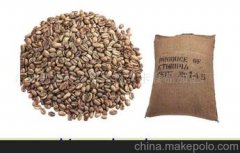
A brief introduction to the planting market price of Dominican boutique coffee beans with pleasant fragrance
The temperate climate in Dominica is conducive to coffee cultivation, and the best places to grow coffee are the Barahona region in the southwest and the Cibao Valley north of Santiago, Dominica's second largest city. The northern region, represented by Hibao, and the southern region, including Okayabani Santo Domingo, produce good coffee. Among them, Santo

Fragrant Jamaican Coffee Flavor introduction to Cliff Manor Jamaican Coffee
The earliest coffee on the island of Jamaica came from Haiti in Latin America in 1728. By 1790, some coffee farmers among the refugees in exile from Haiti had settled in the Blue Mountains and brought coffee-growing technology here. In 1838, Jamaica abolished slavery and allowed liberated slaves to cultivate their own land. Free slaves moved to the mountains to specialize in planting.

A brief introduction to the market price of bright and sour Dominican boutique coffee beans
The earliest coffee in Dominica was introduced from Martinique (the overseas province of France), dating back to the early 18th century. Dominica is an island country with a tropical climate. The temperature changes little throughout the year. Except for the lower temperature in the Central Cordillera Mountains, which can reach less than 0 ℃ in winter, the annual average temperature in other areas is between 2530 ℃, which is affected by the mountain topography.

A brief introduction to the origin, development, history and culture of Dominican boutique coffee beans with pleasant fragrance
The temperate climate in Dominica is conducive to coffee cultivation, and the best places to grow coffee are the Barahona region in the southwest and the Cibao Valley north of Santiago, Dominica's second largest city. The northern region, represented by Hibao, and the southern region, including Okayabani Santo Domingo, produce good coffee. Among them, Santo
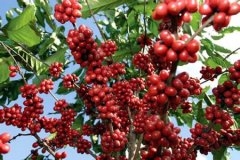
A brief introduction to the planting market price of Dominica boutique coffee beans with mellow taste
The earliest coffee in Dominica was introduced from Martinique (the overseas province of France), dating back to the early 18th century. Dominica is an island country with a tropical climate. The temperature changes little throughout the year. Except for the lower temperature in the Central Cordillera Mountains, which can reach less than 0 ℃ in winter, the annual average temperature in other areas is between 2530 ℃, which is affected by the mountain topography.

A brief introduction to the characteristics of Guatemalan coffee beans the origin of Guatemalan coffee beans
Coffee production in Guatemala has declined relatively, at 700kg per hectare, while that in El Salvador is 900kg per hectare and that in Costa Rica is even more astonishing, at 1700 kg per hectare. The export of dangerous Dimara coffee is controlled by private companies, but the National Coffee Council (Asociacion Nacional de Cafe) controls the coffee industry.

Santo Domingo coffee beans, coffee beans
To trace the origins of Tibica, we must first talk about the coffee tree originally planted in Martinique. These trees were planted by Dominicans as far back as the early 18th century, so Dominica began growing coffee as early as that time. For a time, the Caribbean was almost synonymous with coffee production, but in recent years Cuba, Haiti and other producing areas have been severely damaged by Hurricane George and have since changed.

A brief introduction to the description of the flavor, taste and aroma characteristics of bright and sour Dominican coffee beans
The temperate climate in Dominica is conducive to coffee cultivation, and the best places to grow coffee are the Barahona region in the southwest and the Cibao Valley north of Santiago, Dominica's second largest city. The northern region, represented by Hibao, and the southern region, including Okayabani Santo Domingo, produce good coffee. Among them, Santo

Taste full-bodied Dominican fine coffee beans Growing conditions Location Climate Altitude Profile
The Dominican Republic has also experienced a history of turmoil and poverty. Now that the country has implemented democratic elections and entered a period of stable development, it has not yet established formal diplomatic relations with China, but maintains so-called diplomatic relations with Taiwan. It seems that these things have nothing to do with coffee, but in fact they still have an impact. The exchanges between the two countries without diplomatic relations are subject to many restrictions in all aspects. Of course, they will also

A brief introduction to the origin, development, history and culture of Dominica boutique coffee beans with bright and sour taste
The temperate climate in Dominica is conducive to coffee cultivation, and the best places to grow coffee are the Barahona region in the southwest and the Cibao Valley north of Santiago, Dominica's second largest city. The northern region, represented by Hibao, and the southern region, including Okayabani Santo Domingo, produce good coffee. Among them, Santo

A brief introduction to the history and culture of the origin and development of Dominican boutique coffee beans
Turning to the introduction of Dominican coffee, the most distinctive features are fresh and elegant, full of particles, excellent acidity and pleasant flavor (two colleagues agree with this). Such flavor characteristics are not only related to the variety and the quality of the soil, but also closely related to the picking and handling of raw beans. Dominica's coffee is selected by the most expensive manual method, workers.
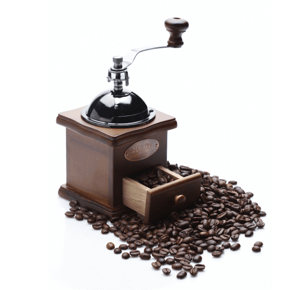
Dominica's Santo Domingo Coffee varieties and characteristics
Following Ka Pin (Wechat official account vdailycom) found that Kind Cafe opened a small shop of its own species Kind Cafe the growing number of species was hit hard by the hurricane in 1998, resulting in countless losses everywhere, so the local people generally began to switch to Kaddura species with lower height and higher harvest. Although Baraona still has Tibica coffee, he suffers from hurricanes every year.

A brief introduction to the description of taste and aroma characteristics of smooth and smooth Dominica boutique coffee beans
Turning to the introduction of Dominican coffee, the most distinctive features are fresh and elegant, full of particles, excellent acidity and pleasant flavor (two colleagues agree with this). Such flavor characteristics are not only related to the variety and the quality of the soil, but also closely related to the picking and handling of raw beans. Dominica's coffee is selected by the most expensive manual method, workers.

A brief introduction to the origin, development, history and culture of Dominica boutique coffee beans with mellow taste
The earliest coffee in Dominica was introduced from Martinique (the overseas province of France), dating back to the early 18th century. Dominica is an island country with a tropical climate. The temperature changes little throughout the year. Except for the lower temperature in the Central Cordillera Mountains, which can reach less than 0 ℃ in winter, the annual average temperature in other areas is between 2530 ℃, which is affected by the mountain topography.